Permitless carry and the Georgia weapons carry license
Georgia is a permitless carry state, so many people ask why anyone still gets a Georgia weapons carry license. The short answer is travel, convenience and a handful of places where the law still speaks of license holders. This guide explains who can carry without a license, who issues the license, what it costs, how to apply at the probate court and where you still cannot carry. It reflects the law as of September 2026 and is not legal advice.
Permitless carry: the lawful weapons carrier
The Georgia Constitutional Carry Act, Senate Bill 319, took effect on April 12, 2022. It lets a lawful weapons carrier carry a handgun openly or concealed without a license. Under the act, a lawful weapons carrier is:
- anyone who holds a Georgia weapons carry license;
- anyone who is eligible for a license and not otherwise barred from having a weapon;
- a resident of another state who would be eligible except for the residency rule;
- anyone licensed to carry a weapon in another state.
The key word is eligible. If the probate court would have to deny your application, because of age, a disqualifying conviction, pending charges or a recent involuntary commitment, you are not a lawful weapons carrier and carrying without a license is a crime. A police officer may not detain you solely to find out whether you are a lawful weapons carrier.
Who qualifies for the license
The license rules are in section 16-11-129 of the Georgia Code. In broad terms, an applicant must:
- be 21 or older, or at least 18 and on active duty in the armed forces or honorably discharged, having completed basic training;
- be a Georgia resident and apply in the county where they live, with exceptions for certain military members stationed in Georgia;
- be a U.S. citizen or lawful resident;
- have no felony conviction and no pending felony charges;
- have no disqualifying misdemeanor convictions or recent drug or alcohol treatment, and no involuntary hospitalization within the periods set by the statute.
The statute lists every ground for denial, and the probate judge applies it after a fingerprint-based background check.
Who issues it and what it costs
The weapons carry license is issued by the probate judge of the county where you live. There is no state office to mail an application to. Fees are set by statute and collected by each court, and county courts post them. Fulton and Hall county probate courts both list $77 for a new license including fingerprints. Renewals cost less, $30 in Hall County and $35 in Fulton, and a replacement for a lost card is a few dollars. Check your own county's probate court page for the current amount and the payment methods it accepts.
A license is valid for five years. Most courts accept renewals starting 90 days before the expiration date and for a short grace period after it; once that window closes you must apply again as a new applicant and pay the full fee.
How to apply
- Start online. Most Georgia probate courts use the statewide Georgia Weapons Carry License application portal at georgiaprobaterecords.com. You fill in the form, then print or bring the confirmation.
- Appear in person. You sign the application before the clerk and pay the fee. Some courts take walk-ins; others book appointments.
- Bring ID. A Georgia driver's license or ID card showing your current street address in that county. Courts do not accept a post office box as proof of residence.
- Fingerprints. New applicants are fingerprinted, often at the court itself, for the state and federal background check.
- Wait. The law gives the court and law enforcement set deadlines to finish the check. Hall County, for example, tells applicants to expect at least three weeks, and up to six, before the card arrives.
Why get the license if you do not need it
- Travel. About 30 states recognize a Georgia weapons carry license, according to the Georgia Attorney General's list, including Alabama, Florida, Tennessee, South Carolina and North Carolina. Several of them, among them Florida and Virginia, honor only licenses issued to people 21 and older. Without a license, you rely on each state's own permitless carry rules, which vary.
- Quick proof. A license settles the question of eligibility at a traffic stop or a dealer counter.
- Dealer checks. Some permits can stand in for the federal background check at a dealer. Ask your dealer whether a current Georgia license is accepted that way.
- Specific exceptions. Some older provisions of the weapons code, such as parts of the school safety zone law, are written around license holders. A license removes doubt.
Where you still cannot carry
Neither permitless carry nor the license opens these places:
- courthouses and government buildings where entry is screened by security personnel;
- jails and prisons;
- state mental health facilities that admit people for involuntary treatment;
- nuclear power facilities;
- within 150 feet of a polling place during an election;
- school safety zones, school buses and school functions, subject to narrow exceptions;
- places of worship, unless the governing body allows carry;
- the secured area of an airport past the screening checkpoint.
Public colleges and universities allow concealed carry on campus, with exclusions such as athletic events, student housing and certain classrooms. Private owners can ban guns on their property. Federal buildings and post offices follow federal law, not Georgia's.
Carrying in a car
A lawful weapons carrier may keep a loaded handgun anywhere in a private vehicle, and an employee generally may leave a lawfully owned gun locked out of sight in a personal vehicle in the employer's parking lot. When you drive into another state, that state's vehicle rules apply the moment you cross the line.
Choosing a carry gun
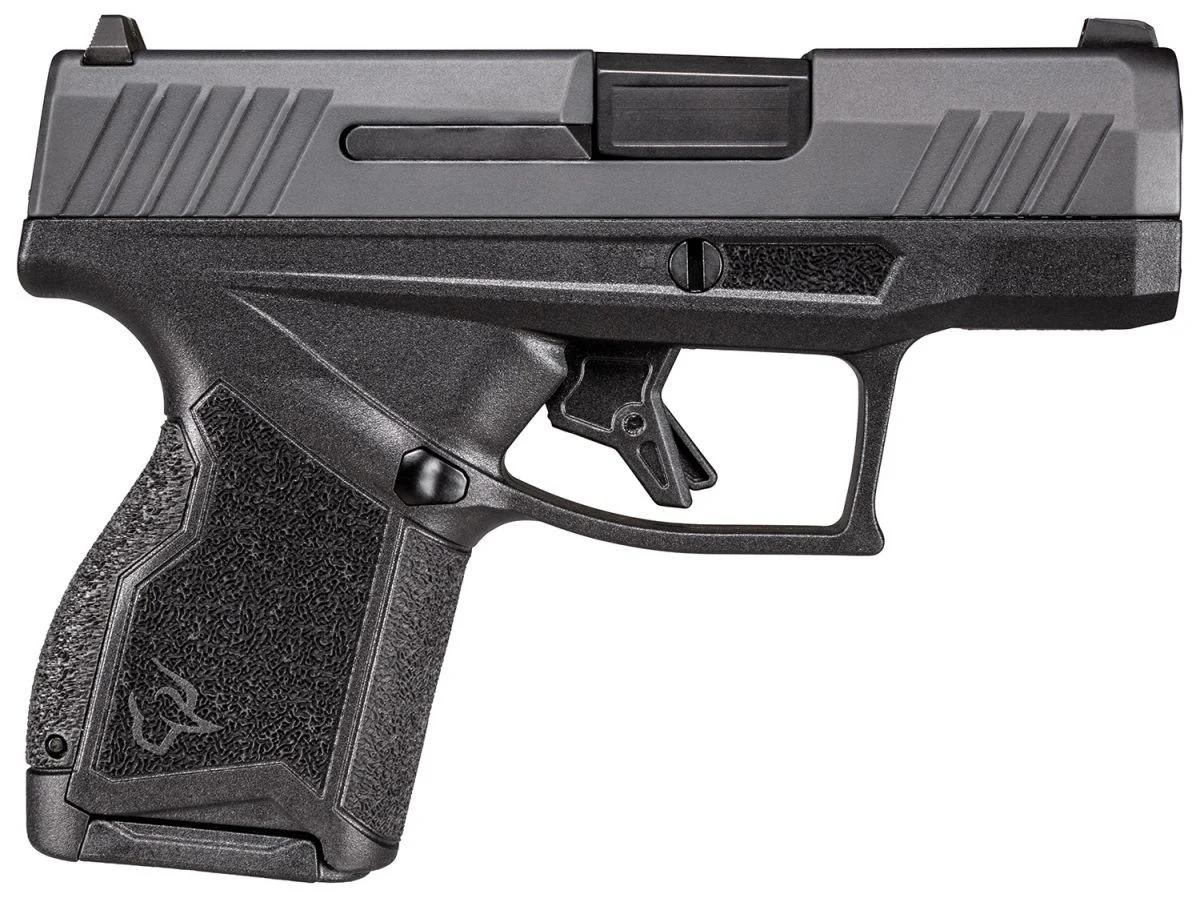
Taurus builds a range of compact pistols and small revolvers suited to daily carry, from the GX4 micro-compact to the G3C and the 856 revolver. Our Taurus buyer's guide compares them, and the Georgia gun laws overview covers buying and transport. Every handgun in our catalog ships to a Georgia dealer you pick, and the gun shop page explains that process.
General information, not legal advice. Current as of September 2026. Laws change; check the official source before you act.